Flouci
Oct 23, 2026
This is a motion concept for Flouci, the Tunisian payments app. I made it on my own; Flouci didn't commission it. It follows my BIAT concept: plain SwiftUI with no packages, built to be filmed rather than used, so nothing talks to a server. It covers six moments of the app: the opening, the terms, location access, loading, sending money home, and the card arriving.
Six scenes that play themselves
Every scene starts on its own and loops with nobody touching the phone. The terms tick themselves, the location prompt comes up by itself, and the card activates itself. One line in the code picks which scene plays, or all of them end to end. That's what made it possible to film each one cleanly.
The video was cut with my own tool. It shows one phone at a time, lets each recording play in full, and glides on to the next before it ends, so no screen sits frozen.
Focus instead of a pen
In BIAT everything drew itself, like a pen. Flouci needed its own idea, and the one I chose is focus. Nothing slides in. Things come into focus out of a soft blur, a little smaller, and land exactly where they belong.
The motion has one rule: no bounce. Every scene uses the same small set of curves, because when each scene invents its own, the cut looks like several different films. It's money, so it should feel calm.
The real artwork, traced
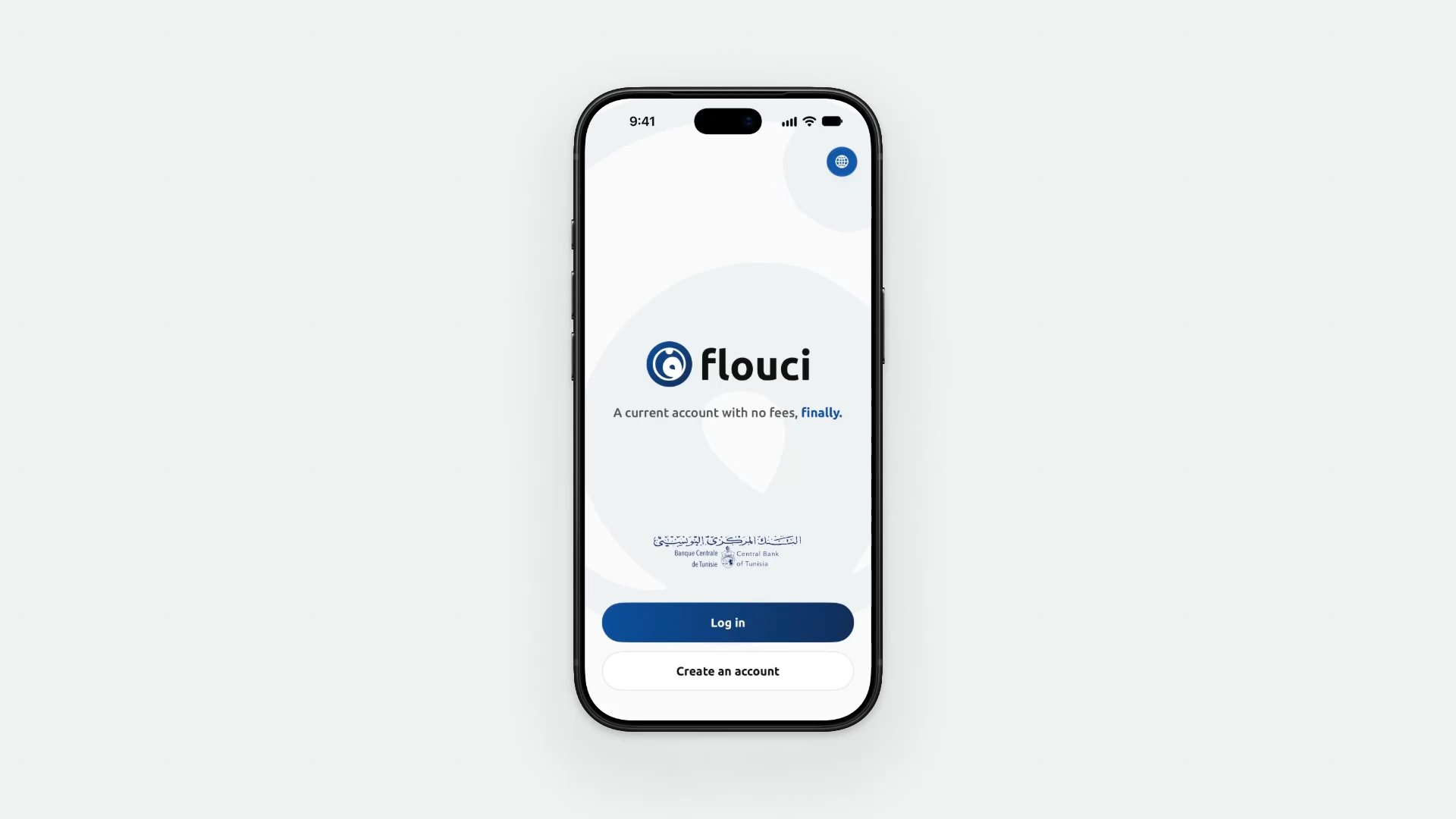
Nothing in the brand is drawn by eye. The spiral comes straight from Flouci's own icon file, turned into Swift path code by a small script. The wordmark, the national arms and the central bank's lockup were traced from the real artwork with potrace. The type is Ubuntu, the face Flouci's wordmark is set in.
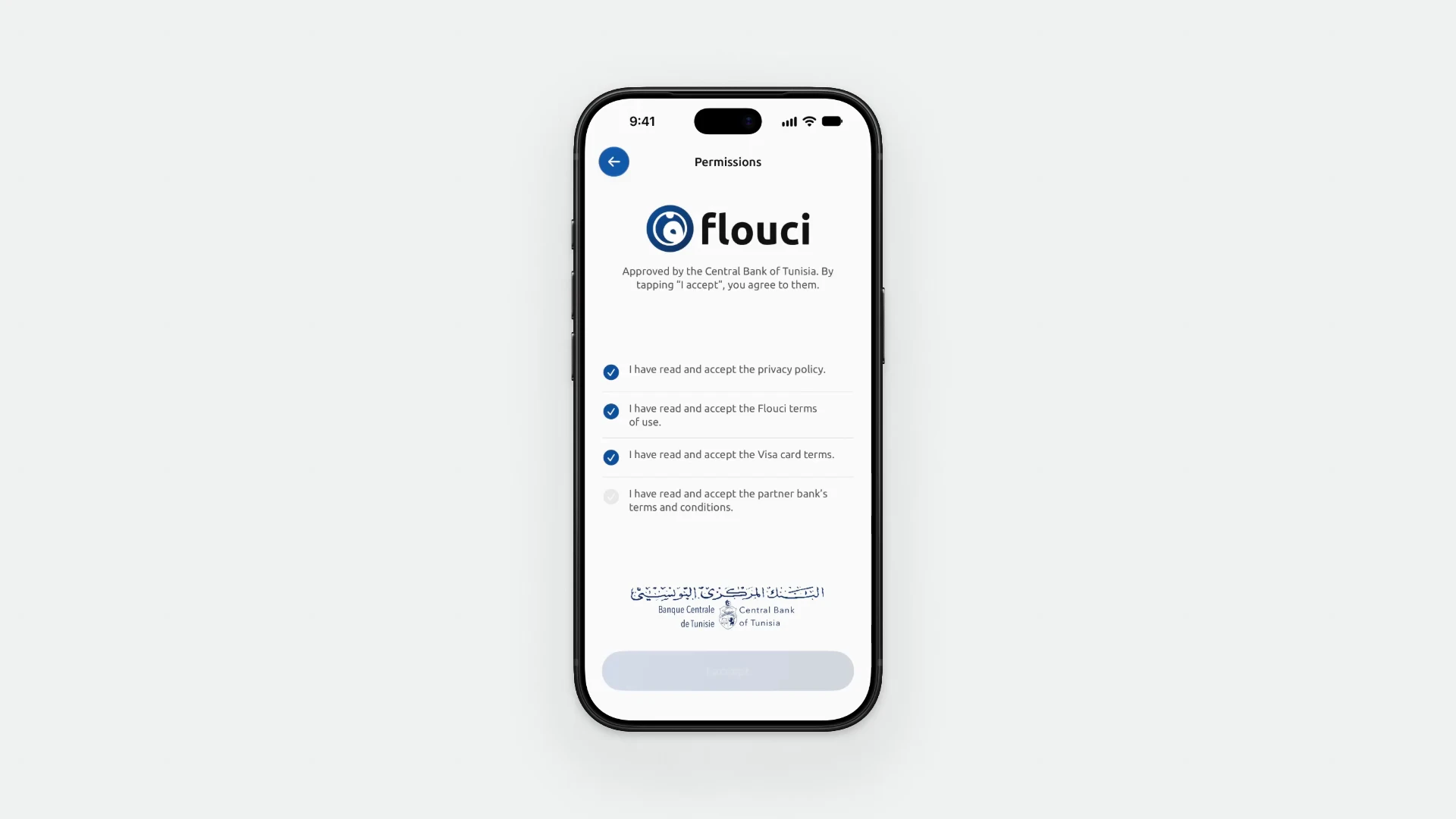
The terms screen asks for the same four agreements Flouci's own app does, under the central bank's lockup. I checked the app's claims against Flouci's website and corrected the ones I couldn't confirm.
A map drawn once
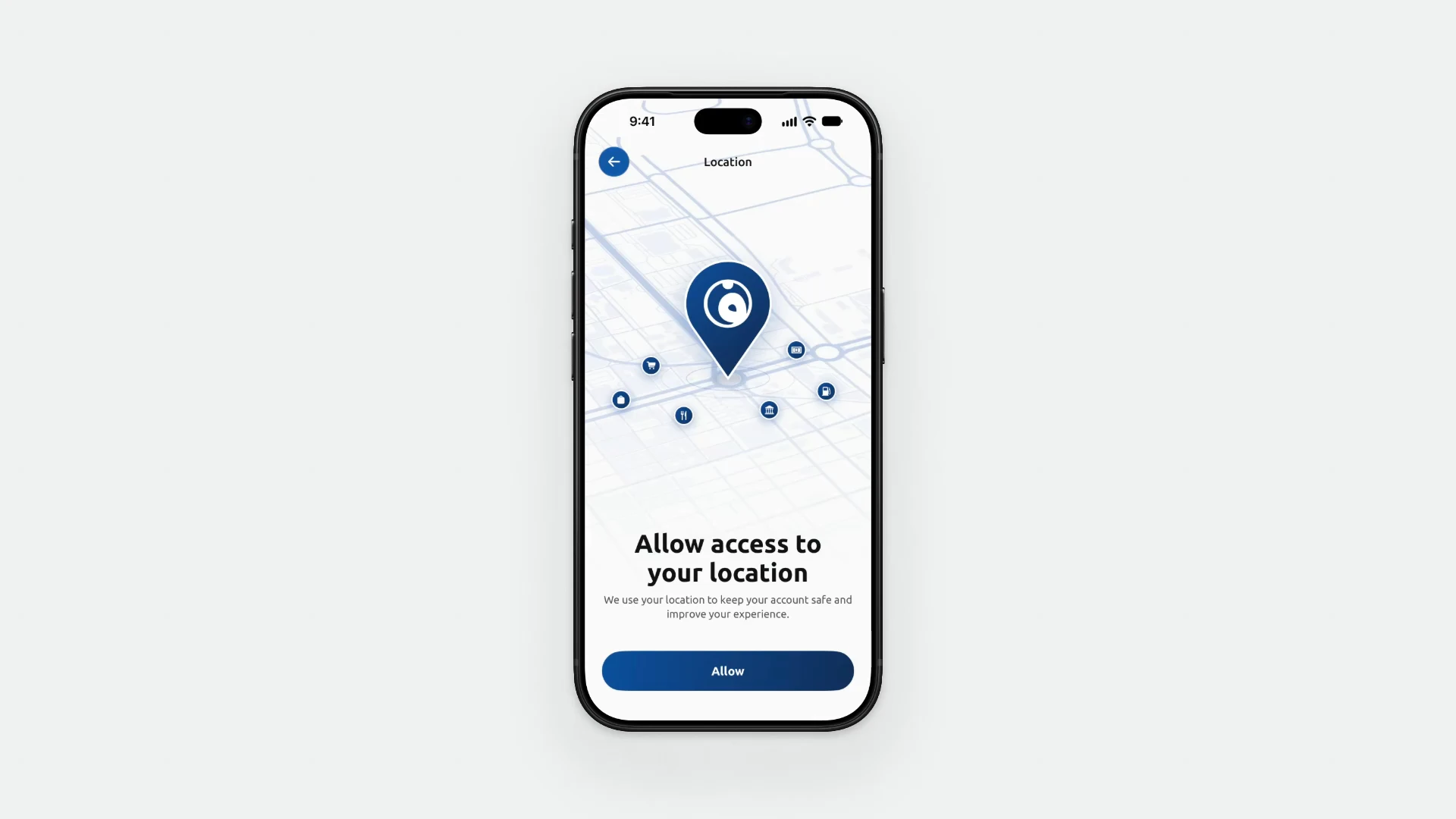
Location access opens on the streets around the clock on Avenue Habib Bourguiba. The map is drawn once from OpenStreetMap into a single picture, with no names and nothing to load. After that only transforms move, so the GPU turns it as the camera swings down to the side.
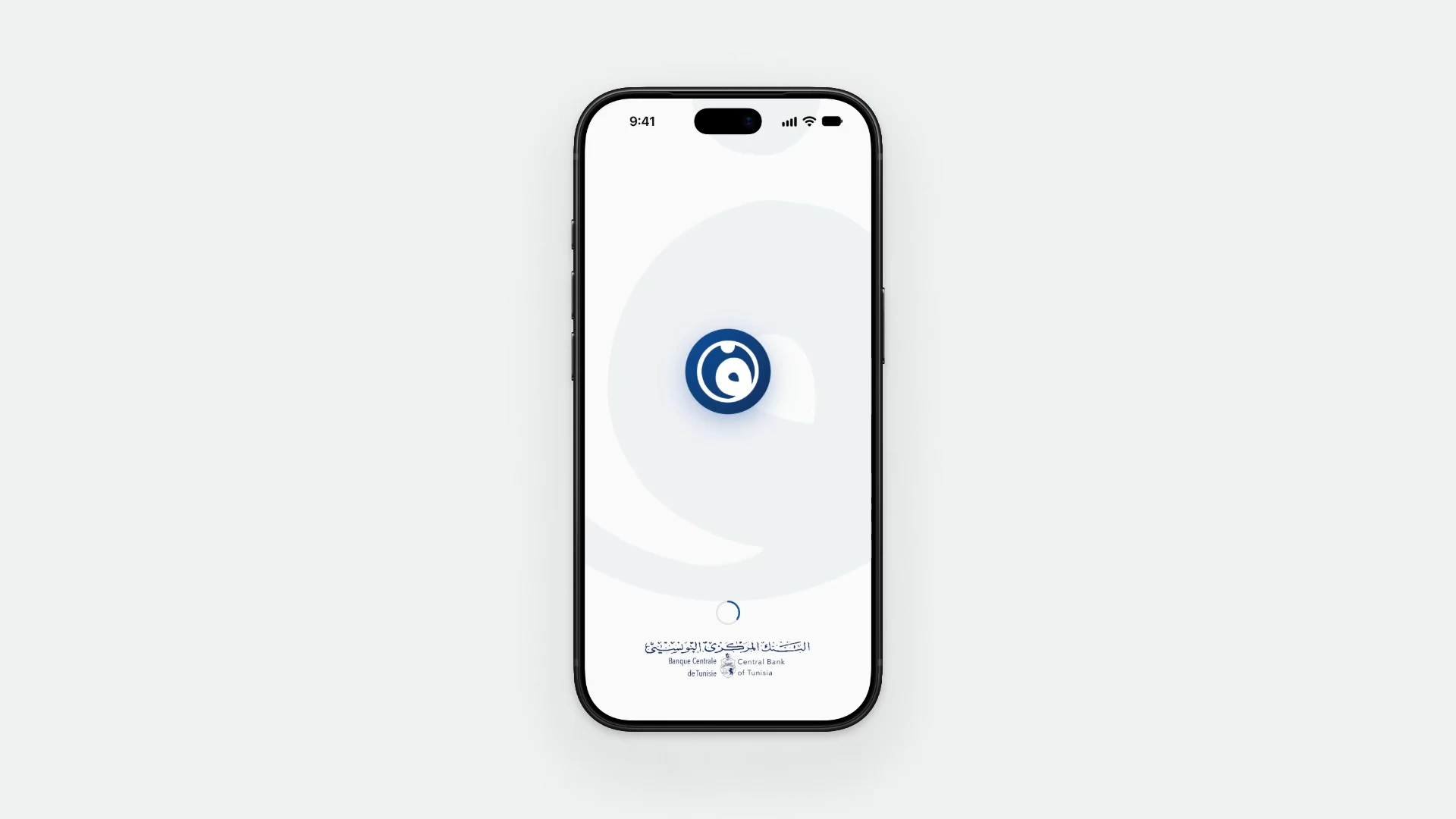
Flouci's mark lands on the clock, draws down into a pin, and rings go out from its tip. The prompt is the system's own. The concept only has to ask, so the answer is never used. The loading screen that follows keeps BIAT's ring, at BIAT's size and weight, so the two concepts belong together.
Money coming home
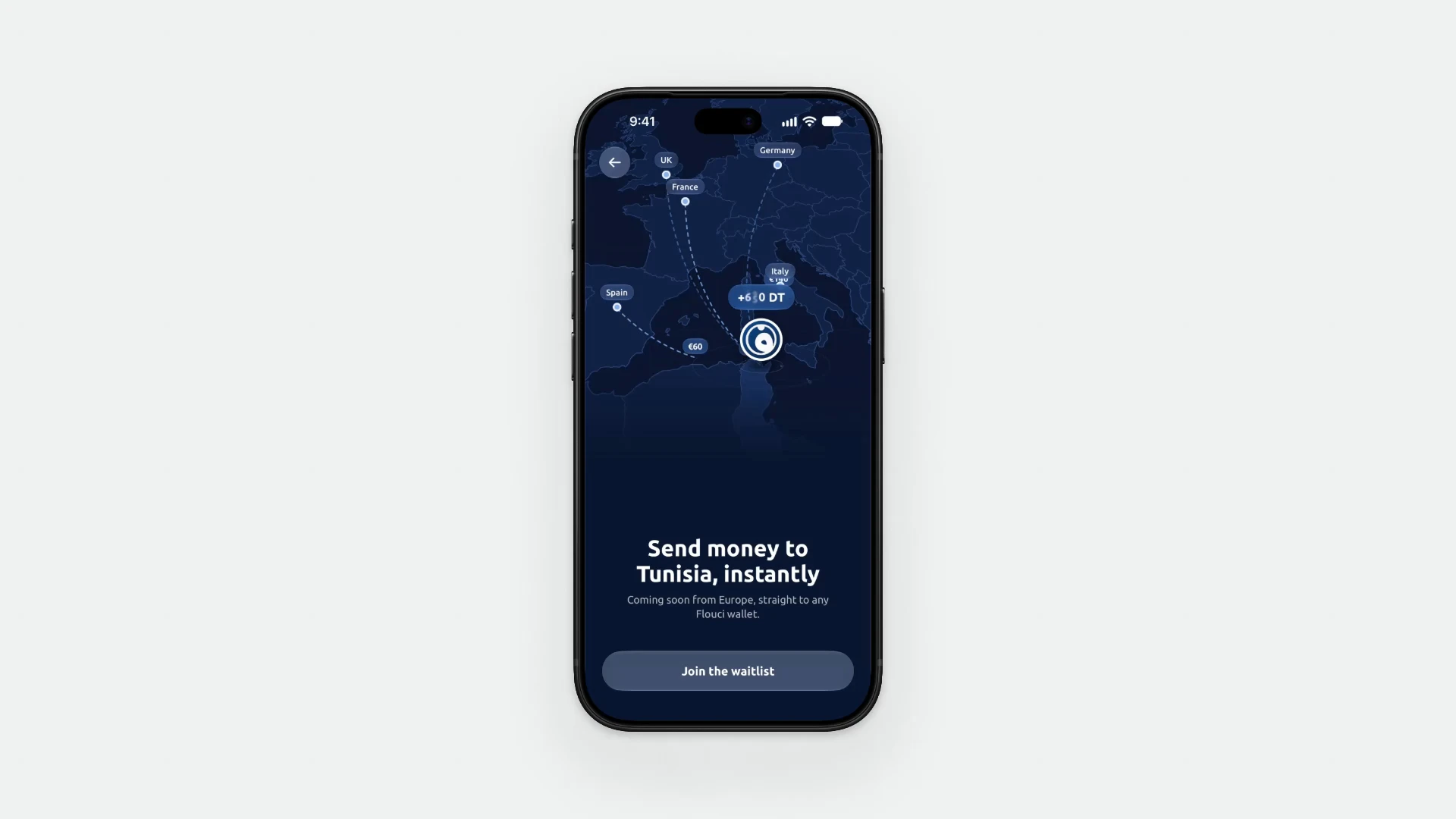
Sending money home is Flouci's own headline. Europe and Tunisia sit at a slight slant, drawn once from Natural Earth. Money leaves the UK, Germany, France, Spain and Italy one after another, and the Flouci pin in Tunis counts it in, in dinars. The amounts use the central bank's rates from early October 2026, and the screen says "coming soon", because that's what Flouci's site says.
The card arrives
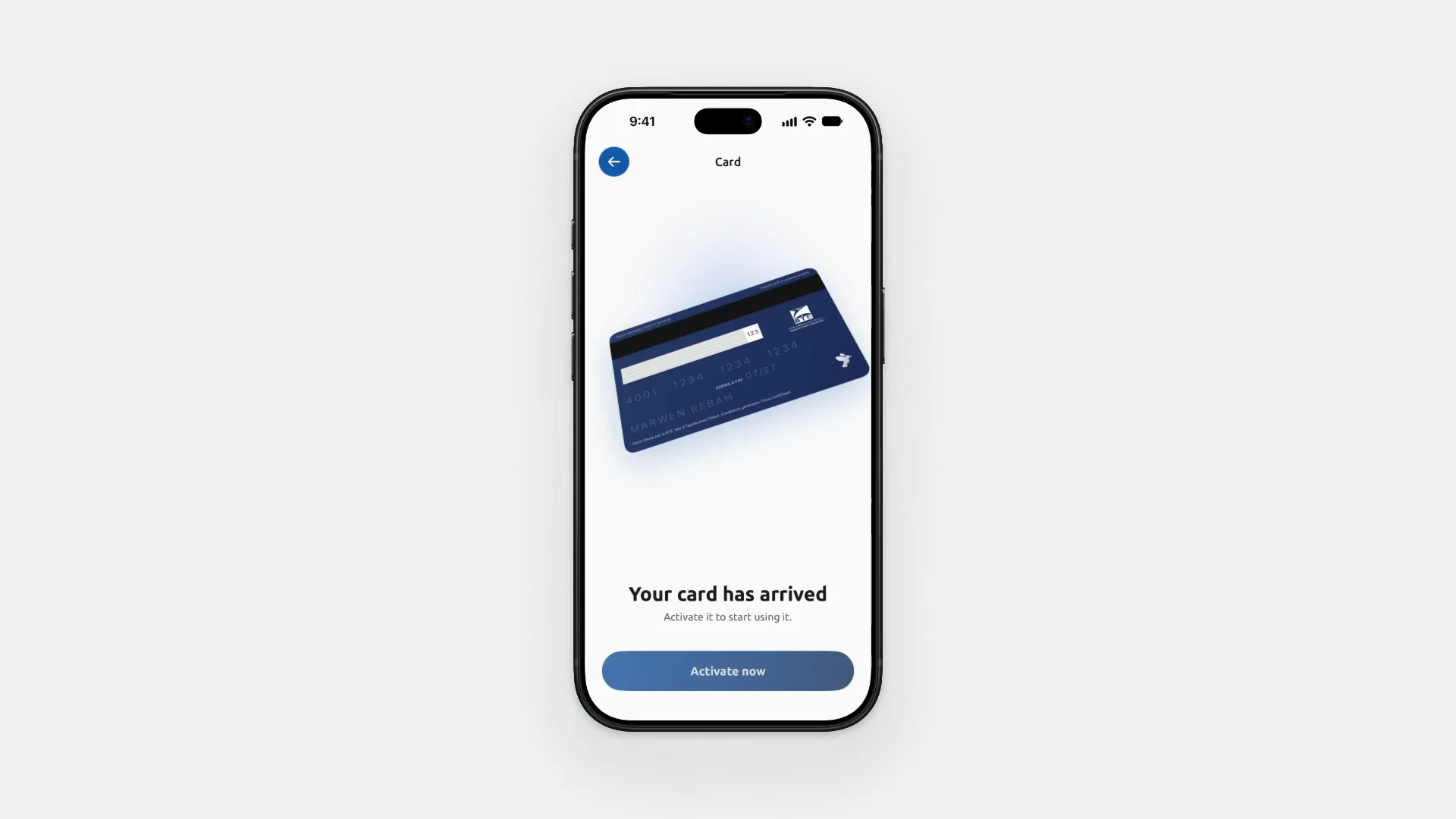
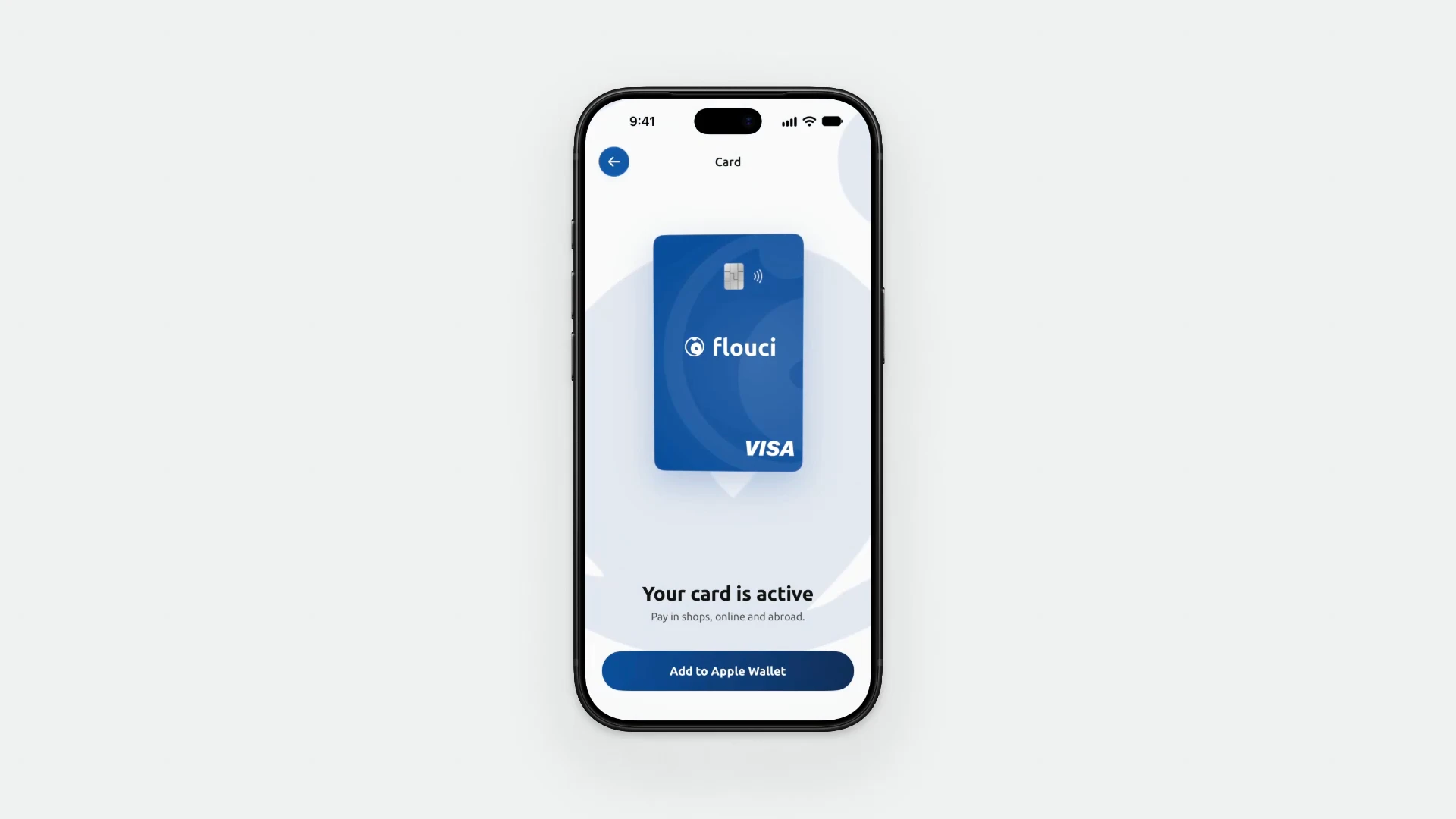
The last scene follows Flouci's own "your card has arrived" screen. An envelope comes up, the Visa card slides out, turns once in the air to show its back, and settles. When it's activated, a shock wave goes out across the page. It's a Metal shader, so it bends what is really on the page rather than drawing a ring over it.
What didn't make it
Most ideas for the opening didn't survive: a coin spinning on a table, strips sliding in, a tile mosaic, coins swirling into the mark, a pouring gradient, a 3D coin diving into the spiral, and the Visa card lit by a shader in a dark room. Next to BIAT, each one felt slower and cheaper, so I cut them. The dive into the card's spiral is what was left.